Recently at the CASE I and II combined conference, I had lunch with some amazing colleagues from a small private college who were trying to manage their excitement over new ideas with the overwhelming expectations of success in a development environment. One can give many answers when someone asks, "Where do I start?”. For me, the beginning always lies in the data; something that I think for many people is an afterthought, a measure of ROI instead of the driving factor for their strategy. Data should be at the beginning and at the core of everything we do. I often ask people about their data, tell me how many reports you send, how many letters you write, how many scholarship funds do you steward, usually these answers for most professionals are burned into their memories. But if I dig even below the surface, the ground becomes much muddier. How many consecutive donors of ten or more years do you have? How many donors are in your giving societies? What is your current retention rate from year 1 to 2, year 2 to 3? I am often met with blank stares and replies of, should I know that?? If you don't know some basic numbers and analyze what they mean for you and your program, how can you build an effective strategy??
So here are a short list of reports you can have pulled so you can analyze the data and determine how it affects your strategy, or have you even considered some of these items??? I recommend all of these reports be pulled looking at the last 5 years...
1. Pull a giving pyramid report, how many donors at each level do you have? Does yours look like a pyramid, a sombrero, an hourglass, or a space needle?? There are strategies for each shape, just like clothing... Ha ha!
2. How many donors do you have giving consecutively for 5, 10, 15, 20 or more years?? These are great people who are under stewarded and make wonderful planned giving prospects. A note here for your data team, pull by calendar year, not fiscal, most of these donors don't know or care about our calendars.
3. How many first time donors did you have last year? What did you do for them?
4. What is your retention rate from year 1 to 2? 2 to 3?? Where is your drop off?? How do you help?
5. Break out your donors by the method in which they give? How many give online, direct mail, phonathon? Then target your stewardship in their preferred medium of communication...
6. For those of you in higher education there are three essential reports: A. pull a list of your married alumni... Sounds simple, but have you done it? B. pull a list of folks that have earned more than one degree from your institution and finally, C. Pull a list of those who have undergraduate degrees vs graduate degrees with their giving histories... This one will astonish you!
7. Find out how many people with email addresses you have, a raw percentage, if it is under 50% you have work to do, over 75%, you're my hero!!!
8. Event attendance: people who attend events are engaged and more likely to give! Who are these folks? Are our events strategic? Or are we just getting the same folks over and over? There are some people that will attend the opening if a door if there's free food… Lol
So about now your brains are churning and you're forwarding this to your data team in a curtly worded email along the lines of..."how come we don't do this?" or "I need all of these by end of business today!"
STOP!
Our data folks are our friends, and just like the facilities staff, are our secret weapons for success! Meet with them, bake them brownies (techies love sugar), take them to lunch, and THEN show them this post... Most will get really excited, some will give an audible sigh, and some will even knock your socks off by saying, "I have all of those, I was waiting for someone to ask me for them!" You will be a genius!! So firm a partnership and work through these reports with them, forming bonds over gaps in the data, they will tell you how you can help them, you'll learn a great deal, and it will be a win win proposition... And if you hear the fateful words, "it's not possible!" call or email me and we can work on making forward progress for you together, better yet, have your data folks call me! Once you have all of this data gold mining done, it is up to YOU to analyze it, build strategies and partnerships and learn how to change those numbers more positive in the future. Need help? I'm a phone call, email, or comment away... I look forward to hearing from you!!!

Thursday, January 26, 2012


Wednesday, January 11, 2012
Digital Donor Recognition!
Recently, I installed my very first digital donor recognition piece here at YU. It was a fascinating process and a whirlwind of donor relations fun... Here are a few photos and things I learned along the way!
It all began with the fundraiser and the director of alumni relations coming to me and saying they needed a plaque... Well since I have a firm aversion to plaques... See previous post here... I called a meeting to investigate.
As we sat across a conference room table, I asked a couple of key questions: 1. Who's paying? Turns out a donor set aside $25k of their gift for this purpose. 2. Where us it going to go? The gym. 3. Has anyone told athletics? blank stares 4. How is a listing on a plaque going to tell a story? Blank states again 5. What if a captain we didn't know about surfaces? ... Well you get my drift...
So, brilliant (and I mean that in a sarcastic manner) mind that I am, I said, What about a digital recognition display??? ... Blank stares... Then... What would that do?? Aha!! Lightbulb moment! It can play videos, tell stories, have text, audio, listing of captains, message from the President, photos, history of the program, and even donor recognition for those who contribute to the scholarship fund in honor of the coach!! As I see the eyes light up across the room and the wheels begin to spin, I realize I might have gotten in over my head... How much will this cost?? I had no clue.
So a plan was set forth, fundraiser would obtain donors, I would get three quotes from vendors, and alumni would start gathering ideas. One minor thing; we had never done anything remotely digital, and boy do we love our Brass plaques... It would be a dynamic change and perhaps would take some convincing. After receiving three bids from vendors I met through ADRP, we had another meeting, this time with athletics at the table. The range of bids was astounding and we began to narrow the field based on functionality, deadline, customer service, and price.


In addition to our digital piece we worked with our communications department to design a colorful Background with images that corresponded. Then we sought approval from the funding donor who loved the idea! After an approval if our VP, the process began in earnest. It is important to note here that each person on the team had an assigned role, from content, to event for the revealing, etc. I served as overall project manager and found it to be a thought provoking and challenging exercise coordinating everyone from facilities, IT, vendors, communications, athletics, and others as needed. The great thing about digital recognition is that it can be changed at any time, if there is a mistake, an omission, more robust content and greater lists of donors, it can all be changed easily!! Once the background arrived it was mounted and the next day the piece was mounted and tested... After many nervous moments it came to life! I am really happy with the results, and the donors are as well. I hope you like the photos and if you have any questions, want to stop by and see it or just chat about your experience, let me know… And look forward to me presenting on this topic soon at a conference near you!

Cheers,
Lynne
It all began with the fundraiser and the director of alumni relations coming to me and saying they needed a plaque... Well since I have a firm aversion to plaques... See previous post here... I called a meeting to investigate.
As we sat across a conference room table, I asked a couple of key questions: 1. Who's paying? Turns out a donor set aside $25k of their gift for this purpose. 2. Where us it going to go? The gym. 3. Has anyone told athletics? blank stares 4. How is a listing on a plaque going to tell a story? Blank states again 5. What if a captain we didn't know about surfaces? ... Well you get my drift...
So, brilliant (and I mean that in a sarcastic manner) mind that I am, I said, What about a digital recognition display??? ... Blank stares... Then... What would that do?? Aha!! Lightbulb moment! It can play videos, tell stories, have text, audio, listing of captains, message from the President, photos, history of the program, and even donor recognition for those who contribute to the scholarship fund in honor of the coach!! As I see the eyes light up across the room and the wheels begin to spin, I realize I might have gotten in over my head... How much will this cost?? I had no clue.
So a plan was set forth, fundraiser would obtain donors, I would get three quotes from vendors, and alumni would start gathering ideas. One minor thing; we had never done anything remotely digital, and boy do we love our Brass plaques... It would be a dynamic change and perhaps would take some convincing. After receiving three bids from vendors I met through ADRP, we had another meeting, this time with athletics at the table. The range of bids was astounding and we began to narrow the field based on functionality, deadline, customer service, and price.


In addition to our digital piece we worked with our communications department to design a colorful Background with images that corresponded. Then we sought approval from the funding donor who loved the idea! After an approval if our VP, the process began in earnest. It is important to note here that each person on the team had an assigned role, from content, to event for the revealing, etc. I served as overall project manager and found it to be a thought provoking and challenging exercise coordinating everyone from facilities, IT, vendors, communications, athletics, and others as needed. The great thing about digital recognition is that it can be changed at any time, if there is a mistake, an omission, more robust content and greater lists of donors, it can all be changed easily!! Once the background arrived it was mounted and the next day the piece was mounted and tested... After many nervous moments it came to life! I am really happy with the results, and the donors are as well. I hope you like the photos and if you have any questions, want to stop by and see it or just chat about your experience, let me know… And look forward to me presenting on this topic soon at a conference near you!

Cheers,
Lynne
Wednesday, December 14, 2011
Let's talk events...
I thought it was timely to post on events. Some of you do events as a part of your daily duties and others of you volunteer or attend or give feedback. Below are my tips and tricks, some tried and true, some may be new to you and some may confirm your philosophies. I would live to hear from you.
1. In 2011 there is no excuse for a hand written name tag. EVER. There are Dymo name tag printers, Brother label makers, and portable wireless printers... Simple, cheap, effective ways for you never to use a sharpie for name tags again.
2. I have NEVER had a drop of alcohol at an event I was working or volunteering. Don't get me wrong, I've had plenty after, but never during. And, for that matter I usually never eat unless seated with guests. That's what tastings are for. If a crisis or medical event were to occur, I want a clear head and the ability to transport someone and meet their needs should something happen. If you need to appear like you are drinking, have a tonic or ginger ale with lime. Seriously, not worth it.
3. If I am doing a seated dinner, I Always negotiate a complimentary private room from the hotel or space. If something happens, you will need somewhere private to be able to take a guest so they aren't publicly embarrassed or for done elderly or those who have overindulged, having thought ahead about a place for them to rest is priceless.
4. Being prepared is necessary. I always have the following with me: Sewing kit, safety and bobby pins, Shout wipes or tide pen, first aid kit, hairspray, cuff links, and pony tail holders... Believe me, I have rescued many a million dollar donors' evenings with one of those items and amazed them in the process.
5. I spend good money on food, sometimes sacrificing flowers or other items because the food is memorable, especially in certain crowds. When you plan the food you should always have a tasting, any caterer that won't let you isn't a good caterer. Take it from a former pastry chef here, it matters. Here's why... It may sound delicious and the photos of it may be grand, but what is the actual eating process going to look like for your guests? Will it be awkward? Will the dipping sauce drip on my new Versace? (I HATE dipping sauces at events, they're landmines) I don't know any society lady that wants spinach or poppy seeds in her expensive veneers... I could do a whole post on food... Hmm good idea...
6. If you are responsible for the entire event, don't work registration. Staff your event wisely, have someone with a meh personality? Don't have them serve as a greeter...
put them somewhere useful but don't let them be the first or last impression of your event. When staffing your event, make sure to communicate your expectations to your volunteers and follow through.
7. Invest in some communication devices. Buy good walkie talkies/ radios with the neat secret service headsets. You won't regret it. Don't forget to give one to the venue and the caterer for clear communication, then train your volunteers to find someone with a radio for questions or situations... Amazingly helpful, and discreet...even in small venues... And you get to look like a spy talking into your lapel or wrist... Ha! You can co purchase with the team that does commencement and share, they will really appreciate it!
8. For your president, CEO, host, whoever is your key person, have a tray made with dinner and some fresh fruit to go. Most of them don't eat, they are busy with the schmooze and presentation and will really appreciate your thoughtfulness.
9. Don't let your decor go to waste! We spend good money on flowers... I order a bunch of the below pictured poly vinyl vases (at a dollar a piece!) and have the florist arrange them so at the end of the night I can treat some of the ladies to beautiful take home flowers! MUCH better than a silly tchotchke... If you have to do a giveaway, I am strongly opposed, think edible, like a chocolate die cast of your logo or symbol... Or you can do what I do now, take 1/2 of your budget for gifts and give it to your general scholarship fund. How will you let donors know?? See #10 the next year you can have the student who received the money from your event speak... Donor relations full circle moment... And your attendees will love it!

10. Stop wasting money on printed programs, menu cards, scrolls of honor, and table place cards. Go green and Invest in technology and wow your attendees. I invested in digital photo frames with my logo and place two on each table or on cocktail tables with the slide show of program, menu, and notes about forgoing the giveaway, etc... Now I would purchase tablets on sale or use iPads.... You can reuse them over and over and at the end of the night aren't throwing away money on printing. And it is so green!!! Take it a step further and buy individual gobos with company logos to project onto their tables so they know where to sit, you can even project individual names on to tables to prevent those pesky name card swappers.... Hard to move yourself if your name is projected on a table!!! Muahaha!
I hope that not all of these ideas were old to you and that you feel invigorated for your next event....
I would love to hear your comments or questions and if you need vendors for the items I mentioned, email me.
And as a parting holiday present to you all, here is a cautionary tale why tchotchkes are dangerous and why checking your data on your list is VITAL....
Happy Holidays, Lynne
1. In 2011 there is no excuse for a hand written name tag. EVER. There are Dymo name tag printers, Brother label makers, and portable wireless printers... Simple, cheap, effective ways for you never to use a sharpie for name tags again.
2. I have NEVER had a drop of alcohol at an event I was working or volunteering. Don't get me wrong, I've had plenty after, but never during. And, for that matter I usually never eat unless seated with guests. That's what tastings are for. If a crisis or medical event were to occur, I want a clear head and the ability to transport someone and meet their needs should something happen. If you need to appear like you are drinking, have a tonic or ginger ale with lime. Seriously, not worth it.
3. If I am doing a seated dinner, I Always negotiate a complimentary private room from the hotel or space. If something happens, you will need somewhere private to be able to take a guest so they aren't publicly embarrassed or for done elderly or those who have overindulged, having thought ahead about a place for them to rest is priceless.
4. Being prepared is necessary. I always have the following with me: Sewing kit, safety and bobby pins, Shout wipes or tide pen, first aid kit, hairspray, cuff links, and pony tail holders... Believe me, I have rescued many a million dollar donors' evenings with one of those items and amazed them in the process.
5. I spend good money on food, sometimes sacrificing flowers or other items because the food is memorable, especially in certain crowds. When you plan the food you should always have a tasting, any caterer that won't let you isn't a good caterer. Take it from a former pastry chef here, it matters. Here's why... It may sound delicious and the photos of it may be grand, but what is the actual eating process going to look like for your guests? Will it be awkward? Will the dipping sauce drip on my new Versace? (I HATE dipping sauces at events, they're landmines) I don't know any society lady that wants spinach or poppy seeds in her expensive veneers... I could do a whole post on food... Hmm good idea...
6. If you are responsible for the entire event, don't work registration. Staff your event wisely, have someone with a meh personality? Don't have them serve as a greeter...
put them somewhere useful but don't let them be the first or last impression of your event. When staffing your event, make sure to communicate your expectations to your volunteers and follow through.
7. Invest in some communication devices. Buy good walkie talkies/ radios with the neat secret service headsets. You won't regret it. Don't forget to give one to the venue and the caterer for clear communication, then train your volunteers to find someone with a radio for questions or situations... Amazingly helpful, and discreet...even in small venues... And you get to look like a spy talking into your lapel or wrist... Ha! You can co purchase with the team that does commencement and share, they will really appreciate it!
8. For your president, CEO, host, whoever is your key person, have a tray made with dinner and some fresh fruit to go. Most of them don't eat, they are busy with the schmooze and presentation and will really appreciate your thoughtfulness.
9. Don't let your decor go to waste! We spend good money on flowers... I order a bunch of the below pictured poly vinyl vases (at a dollar a piece!) and have the florist arrange them so at the end of the night I can treat some of the ladies to beautiful take home flowers! MUCH better than a silly tchotchke... If you have to do a giveaway, I am strongly opposed, think edible, like a chocolate die cast of your logo or symbol... Or you can do what I do now, take 1/2 of your budget for gifts and give it to your general scholarship fund. How will you let donors know?? See #10 the next year you can have the student who received the money from your event speak... Donor relations full circle moment... And your attendees will love it!

10. Stop wasting money on printed programs, menu cards, scrolls of honor, and table place cards. Go green and Invest in technology and wow your attendees. I invested in digital photo frames with my logo and place two on each table or on cocktail tables with the slide show of program, menu, and notes about forgoing the giveaway, etc... Now I would purchase tablets on sale or use iPads.... You can reuse them over and over and at the end of the night aren't throwing away money on printing. And it is so green!!! Take it a step further and buy individual gobos with company logos to project onto their tables so they know where to sit, you can even project individual names on to tables to prevent those pesky name card swappers.... Hard to move yourself if your name is projected on a table!!! Muahaha!
I hope that not all of these ideas were old to you and that you feel invigorated for your next event....
I would love to hear your comments or questions and if you need vendors for the items I mentioned, email me.
And as a parting holiday present to you all, here is a cautionary tale why tchotchkes are dangerous and why checking your data on your list is VITAL....
Happy Holidays, Lynne
Wednesday, November 30, 2011
'Tis The Season!
It's that magical time of year again, a chill in the air, holiday parties, and the most magical thing of all, year end solicitations... Ha ha. I jest, but in all reality I am very serious here, at the end of the year we ask, ask, and ask some more.
Which leads me to ask YOU, are you thanking as much as you are asking, if not more?? Don't misunderstand, I know you are doing your best keeping up with acknowledgments and holiday party eggnog and such, but outside of that, what are you doing to let donors know you appreciate them??
Holiday cards are nice, I guess, but they're ridiculously expensive and time consuming... How many people need to see that list?? I still chuckle here at Yeshiva every time I get a Christmas card catalog and samples... Talk about mistargeted direct mail! Ok, I digress, back to the point, what are you doing at the end of this year, the beginning of next to appreciate your donors?
Here are some ideas:
1. How about a lovely holiday video or a tour of campus? Could be for new years as well- here are some samples 1 2 3 4 5
2. At this time, some orgs send a screensaver download that donors can use year round
3. We send the following card for Haunakkah, as part of my high end blanket stewardship program, inviting them to has a personal tour of our museum.
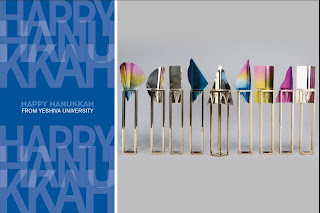

4. We turn that around and for our mid level donors, send them a link to a virtual tour of our exhibits
5. We are also planning our annual thank a thon for January, where we call and thank our donors... Look for an upcoming post on its execution soon!
6. For monthly or direct eft donors an email profiling one thing that happened at your org each month, a simple paragraph or image, that wouldn't have happened without private support!
I think the point that I am trying to make here is evident, are we thanking as much as we're asking?? Notice that none of these gas a tangible IRS FMV benefit, so I avoid jeopardizing their tax deductibility status as well... Hint hint!
In turn, you are showing donors that you think of them as more than a transaction, they are engaged partners in your success and they are appreciated. So what are you going to do???
Cheers,
Lynne
Which leads me to ask YOU, are you thanking as much as you are asking, if not more?? Don't misunderstand, I know you are doing your best keeping up with acknowledgments and holiday party eggnog and such, but outside of that, what are you doing to let donors know you appreciate them??
Holiday cards are nice, I guess, but they're ridiculously expensive and time consuming... How many people need to see that list?? I still chuckle here at Yeshiva every time I get a Christmas card catalog and samples... Talk about mistargeted direct mail! Ok, I digress, back to the point, what are you doing at the end of this year, the beginning of next to appreciate your donors?
Here are some ideas:
1. How about a lovely holiday video or a tour of campus? Could be for new years as well- here are some samples 1 2 3 4 5
2. At this time, some orgs send a screensaver download that donors can use year round
3. We send the following card for Haunakkah, as part of my high end blanket stewardship program, inviting them to has a personal tour of our museum.


4. We turn that around and for our mid level donors, send them a link to a virtual tour of our exhibits
5. We are also planning our annual thank a thon for January, where we call and thank our donors... Look for an upcoming post on its execution soon!
6. For monthly or direct eft donors an email profiling one thing that happened at your org each month, a simple paragraph or image, that wouldn't have happened without private support!
I think the point that I am trying to make here is evident, are we thanking as much as we're asking?? Notice that none of these gas a tangible IRS FMV benefit, so I avoid jeopardizing their tax deductibility status as well... Hint hint!
In turn, you are showing donors that you think of them as more than a transaction, they are engaged partners in your success and they are appreciated. So what are you going to do???
Cheers,
Lynne
Thursday, November 10, 2011
Thank a Donor Week
Hello everyone!
I am writing this from my desk after leaving my thank a donor week tables in the capable hands of other staff and wanted to let you know what an amazing experience it has been! I generously stole the idea for thank a donor week from my friend Paige Eubanks-Barrow, the brand new AVP of donor relations at Oklahoma State, previously of Carnegie Mellon… she blogged about it here for me.

Basically, my goal was to collect 1000 hand written thank you notes from students in a one week period. We set up tables on both the boys’ and girls’ campus and made it easy for them! We offered a ticket to a raffle for $100, kosher candy, and wonderfully cheap tchotchkes!! On day one we had 444 notes!!I was overwhelmed by the student outpouring!! By day two we had 703 notes and on day three, yesterday we met and surpassed our goal, we were at 1012 notes!! I am eagerly awaiting our final numbers but am thrilled to say I took a calculated risk and it worked. Final Numbers are in!! 1428 notesin four days!! I think this is a program I would love to see cropping up at organizations everywhere. In addition to boundless meaningful notes from students, we also had the time to spend with them educating them about what private philanthropy means to them and to the university as a whole. It was inspiring. We got coverage in the student news papers and on our website here.

So here are some things I learned this week:
1. Most students are VERY grateful for donors, they just don’t usually know how to spell it! Ha!
2. The boys out wrote the girls 3 to 1… I was shocked by that!! Maybe it was the chance at the money
3. Some students faithfully came by every day to write a note and some took cards with them and returned with multiple notes completed!! (My guess is that they did them in class but if you ask me I will deny it!!) The most notes written by a single student was 15!!!
4. We received many great compliments from students about the idea, being innovative and inspiring them to think about their supporters.
5. Next week we will sort the notes and scan them and then mail them before thanksgiving, hitting the homes of donors at a particularly meaningful time.

I hope you enjoyed hearing about this effort, it was truly invigorating and exhausting but so worth the effort of myself and my team!
Cheers,
Lynne
I am writing this from my desk after leaving my thank a donor week tables in the capable hands of other staff and wanted to let you know what an amazing experience it has been! I generously stole the idea for thank a donor week from my friend Paige Eubanks-Barrow, the brand new AVP of donor relations at Oklahoma State, previously of Carnegie Mellon… she blogged about it here for me.

Basically, my goal was to collect 1000 hand written thank you notes from students in a one week period. We set up tables on both the boys’ and girls’ campus and made it easy for them! We offered a ticket to a raffle for $100, kosher candy, and wonderfully cheap tchotchkes!! On day one we had 444 notes!!I was overwhelmed by the student outpouring!! By day two we had 703 notes and on day three, yesterday we met and surpassed our goal, we were at 1012 notes!! I am eagerly awaiting our final numbers but am thrilled to say I took a calculated risk and it worked. Final Numbers are in!! 1428 notesin four days!! I think this is a program I would love to see cropping up at organizations everywhere. In addition to boundless meaningful notes from students, we also had the time to spend with them educating them about what private philanthropy means to them and to the university as a whole. It was inspiring. We got coverage in the student news papers and on our website here.

So here are some things I learned this week:
1. Most students are VERY grateful for donors, they just don’t usually know how to spell it! Ha!
2. The boys out wrote the girls 3 to 1… I was shocked by that!! Maybe it was the chance at the money
3. Some students faithfully came by every day to write a note and some took cards with them and returned with multiple notes completed!! (My guess is that they did them in class but if you ask me I will deny it!!) The most notes written by a single student was 15!!!
4. We received many great compliments from students about the idea, being innovative and inspiring them to think about their supporters.
5. Next week we will sort the notes and scan them and then mail them before thanksgiving, hitting the homes of donors at a particularly meaningful time.

I hope you enjoyed hearing about this effort, it was truly invigorating and exhausting but so worth the effort of myself and my team!
Cheers,
Lynne
Wednesday, November 2, 2011
Story Telling Through Video
As many of you know, I love technology; but did you know I collect fundraising and stewardship videos all the time?? Well I do, now that the secret is out of the dark, I thought I would share two videos I recently received and tell you why the storytelling in each example is so effective and powerful.
The first video came to me through ESPN and also through my friend John Taylor at NC State. It is from Bowling Green State University and is absolutely cutting edge and brilliant. It takes risks, and does some very good storytelling using tactics that can be applied anywhere in any medium. Here is the link to the story and video. Now, let's examine a few of its best features:
1. It involves students- the rapper? He's one, the producers too... Brilliant!
2. It involves the donors directly- the older gentlemen in the jerseys? Yep, that's them, and I bet if you asked them they had the time of their lives!! Who needs a bronze bust when you have YouTube?? How fun! I bet there are other donors out there who would love to have this happen to them so they can tell their grandkids to "find me on YouTube".
3. The lyrics are on target and tell the story while having fun with an exciting new piece of campus! You might say, "That will never fly at my organization." Really? Have you tried taking a risk lately?? I bet not
4. Its catchy and educates all generations on philanthropy- brilliant!! - Do I sound like a Guinness commercial yet?
The next video comes to me locally from our friends building the new Chabad space serving NYU. Click here to see the brilliant storytelling.
This video tells a powerful story in a completely different manifestation than the BGSU video.
1. What it does, most brilliantly, is call the viewer to action- I want to go hop the subway downtown and sign the Bowery myself!!
2. It also involves students, those who will benefit from the gift. This is a powerful tactic that draws you even closer to the story.
3. I think far too often we all focus on the end version, the artistic rendering, or what could be, and we often forget that supporters want to be involved and see the project during its "ugly" construction phase, to see the reality in action. This video shows us the space as it undergoes transformation in real time! I often recommend to my clients that if they are building to do a time lapse video or slide show or even live web cams(if you REALLY trust your construction company folks) because the donors see the progress and can watch their gift literally come to life.
4. Finally, both videos tell their stories in a unique and refreshing manner. It makes you think, react, laugh, enjoy the time and want to share them. That is effective and brilliant!!
So what do you think of these two samples from my collection?? I always look forward to your comments. If you have a video you want to share and proudly add to my coffers, email me the link: lynne@donorrelationsguru.com
Don’t forget to catch me on the upcoming November 15th ADRP webinar on Acknowledgments click here for more information!
Cheers,
Lynne
The first video came to me through ESPN and also through my friend John Taylor at NC State. It is from Bowling Green State University and is absolutely cutting edge and brilliant. It takes risks, and does some very good storytelling using tactics that can be applied anywhere in any medium. Here is the link to the story and video. Now, let's examine a few of its best features:
1. It involves students- the rapper? He's one, the producers too... Brilliant!
2. It involves the donors directly- the older gentlemen in the jerseys? Yep, that's them, and I bet if you asked them they had the time of their lives!! Who needs a bronze bust when you have YouTube?? How fun! I bet there are other donors out there who would love to have this happen to them so they can tell their grandkids to "find me on YouTube".
3. The lyrics are on target and tell the story while having fun with an exciting new piece of campus! You might say, "That will never fly at my organization." Really? Have you tried taking a risk lately?? I bet not
4. Its catchy and educates all generations on philanthropy- brilliant!! - Do I sound like a Guinness commercial yet?
The next video comes to me locally from our friends building the new Chabad space serving NYU. Click here to see the brilliant storytelling.
This video tells a powerful story in a completely different manifestation than the BGSU video.
1. What it does, most brilliantly, is call the viewer to action- I want to go hop the subway downtown and sign the Bowery myself!!
2. It also involves students, those who will benefit from the gift. This is a powerful tactic that draws you even closer to the story.
3. I think far too often we all focus on the end version, the artistic rendering, or what could be, and we often forget that supporters want to be involved and see the project during its "ugly" construction phase, to see the reality in action. This video shows us the space as it undergoes transformation in real time! I often recommend to my clients that if they are building to do a time lapse video or slide show or even live web cams(if you REALLY trust your construction company folks) because the donors see the progress and can watch their gift literally come to life.
4. Finally, both videos tell their stories in a unique and refreshing manner. It makes you think, react, laugh, enjoy the time and want to share them. That is effective and brilliant!!
So what do you think of these two samples from my collection?? I always look forward to your comments. If you have a video you want to share and proudly add to my coffers, email me the link: lynne@donorrelationsguru.com
Don’t forget to catch me on the upcoming November 15th ADRP webinar on Acknowledgments click here for more information!
Cheers,
Lynne
Wednesday, October 26, 2011
Quid Pro Quo-Oh No!
Last week a hot topic flew across the listservs I am a member of. Yesterday, I brought it to my home base listserv to the surprise and sometime delight of some of my professional colleagues across the land. The IRS has just released its section 526 ruling for 2012. And lo and behold, there in tax-ease for all of us to misinterpret is a stricter ruling on the giving of "token gifts" to donors.
---The quid pro quo benefit limits for 2012 have just been announced by the IRS. They are as follows:
For gifts IN EXCESS OF $49.50, you may provide insubstantial (token) items, containing the organization name or logo, without reducing the gift amount as long as the cumulative low-cost value is LESS THAN $9.90.
For gifts below $49.50, you must fully disclose the value of all such benefits - and reduce the gift accordingly - if that benefit value is less than $1.
Below that gift level the token benefit exclusion no longer applies.
Therefore, for a gift of $25, the highest cumulative FMV of benefits you can provide without having to disclose/reduce the gift is a whopping 50 cents. A $10 gift = 20 cents in benefits without disclosure.
For more substantial benefits, like events not items, you do not have to disclose the value as long as the cumulative value of all benefits does not exceed $99 or 2% of the amount given - whichever is LESS.
This is why, on every solicitation some organizations send, they include a check box for: "Please waive benefits so we can deduct the full amount of donation for tax purposes."
See page 17 here for further clarification.
The "receipt" of the benefit does not have to be at the exact second the gift is made - getting it in the mail or in person a few weeks or months later as a direct result of a gift means that the donor "receives" something in exchange.”
These limits are right on trend and have made many of us in the donor relations world that abhor tchotchkes very happy. But for many of my colleagues the panicked question remains, "I'm supposed to follow these rules!?!" The answer is simply YES. Not only are we stewards of donors funds and the builders of relationships, we are also their advocates. Think of us as nurses in this sense, whatever is best for the patient/donor we MUST advocate for. This includes helping to protect them from losing their deductibility of their gift because we just HAD to give them another pen set. We must advocate and ensure that these IRS rules are followed to the letter.
I think from an internal perspective this means a sit down with your counsel and having them make a definitive ruling on this tax code for your organization. The next step involves your communicating with your internal constituents and explaining this to them. Making sure that they understand that this isn't just an idea you came up with so you can get rid of that closet full of gifts in your office(ahem)... Complete understanding and compliance is a must, it is our pleasure and duty to at all times keep the donor in mind.
According to Penelope Burk, who I will quote here, this directly aligns with what donors are telling her repeatedly in her studies and jives with what some of us have been preaching for years. Donor relations is not about an exchange of money for items or perks, it is a relationship building, appreciative, strategic, and holistic view of a relationship.
Penelope says,
"On this issue, both the IRS and donors are in complete agreement. Donors don't want these token gifts and sending them makes fundraisers' jobs much more difficult, especially in tough economic times. Why give donors one more reason to question the cost-effectiveness of fundraising appeals and the sincerity of not-for-profits who solicit with a sense of urgency, then refund some of the donor's gift in the form of a trinket that they never asked for and don't want.
There are, however, gifts that are truly appreciated by donors, which positively contribute to their retention and higher gift value, and which have no negative implication. They are:
• beautiful, original thank you letters -- considered to be the ultimate in donor recognition and often referred to by donors as "gifts";
• thoughtful, impromptu calls that acknowledge a recent gift or simply the ongoing loyalty of a donor -- stunningly effective at furthering donor retention, a source of tremendous information about donors for the purpose of cultivating them into major giving, and highly effective as a motivator for volunteers and paid professional fundraisers, reminding them why they do this job.
It's not often that I am able to say that the IRS got it right, but they certainly have on this issue. They are doing the fundraising industry and, in particular, our stewardship profession, a favor."
So, my challenge to you is, what are you doing to advocate for your donors? Are there other cases in which you have protected their interests? I look forward to your comments.
Until then, I'm having a garage/closet sale, anyone want a branded paperweight?? Ha.
Cheers,
Lynne
--- Upcoming is another swap brought to you by the makers of the acknowledgment and solicitation swap...Get your best INVITATIONS ready!!---
---The quid pro quo benefit limits for 2012 have just been announced by the IRS. They are as follows:
For gifts IN EXCESS OF $49.50, you may provide insubstantial (token) items, containing the organization name or logo, without reducing the gift amount as long as the cumulative low-cost value is LESS THAN $9.90.
For gifts below $49.50, you must fully disclose the value of all such benefits - and reduce the gift accordingly - if that benefit value is less than $1.
Below that gift level the token benefit exclusion no longer applies.
Therefore, for a gift of $25, the highest cumulative FMV of benefits you can provide without having to disclose/reduce the gift is a whopping 50 cents. A $10 gift = 20 cents in benefits without disclosure.
For more substantial benefits, like events not items, you do not have to disclose the value as long as the cumulative value of all benefits does not exceed $99 or 2% of the amount given - whichever is LESS.
This is why, on every solicitation some organizations send, they include a check box for: "Please waive benefits so we can deduct the full amount of donation for tax purposes."
See page 17 here for further clarification.
The "receipt" of the benefit does not have to be at the exact second the gift is made - getting it in the mail or in person a few weeks or months later as a direct result of a gift means that the donor "receives" something in exchange.”
These limits are right on trend and have made many of us in the donor relations world that abhor tchotchkes very happy. But for many of my colleagues the panicked question remains, "I'm supposed to follow these rules!?!" The answer is simply YES. Not only are we stewards of donors funds and the builders of relationships, we are also their advocates. Think of us as nurses in this sense, whatever is best for the patient/donor we MUST advocate for. This includes helping to protect them from losing their deductibility of their gift because we just HAD to give them another pen set. We must advocate and ensure that these IRS rules are followed to the letter.
I think from an internal perspective this means a sit down with your counsel and having them make a definitive ruling on this tax code for your organization. The next step involves your communicating with your internal constituents and explaining this to them. Making sure that they understand that this isn't just an idea you came up with so you can get rid of that closet full of gifts in your office(ahem)... Complete understanding and compliance is a must, it is our pleasure and duty to at all times keep the donor in mind.
According to Penelope Burk, who I will quote here, this directly aligns with what donors are telling her repeatedly in her studies and jives with what some of us have been preaching for years. Donor relations is not about an exchange of money for items or perks, it is a relationship building, appreciative, strategic, and holistic view of a relationship.
Penelope says,
"On this issue, both the IRS and donors are in complete agreement. Donors don't want these token gifts and sending them makes fundraisers' jobs much more difficult, especially in tough economic times. Why give donors one more reason to question the cost-effectiveness of fundraising appeals and the sincerity of not-for-profits who solicit with a sense of urgency, then refund some of the donor's gift in the form of a trinket that they never asked for and don't want.
There are, however, gifts that are truly appreciated by donors, which positively contribute to their retention and higher gift value, and which have no negative implication. They are:
• beautiful, original thank you letters -- considered to be the ultimate in donor recognition and often referred to by donors as "gifts";
• thoughtful, impromptu calls that acknowledge a recent gift or simply the ongoing loyalty of a donor -- stunningly effective at furthering donor retention, a source of tremendous information about donors for the purpose of cultivating them into major giving, and highly effective as a motivator for volunteers and paid professional fundraisers, reminding them why they do this job.
It's not often that I am able to say that the IRS got it right, but they certainly have on this issue. They are doing the fundraising industry and, in particular, our stewardship profession, a favor."
So, my challenge to you is, what are you doing to advocate for your donors? Are there other cases in which you have protected their interests? I look forward to your comments.
Until then, I'm having a garage/closet sale, anyone want a branded paperweight?? Ha.
Cheers,
Lynne
--- Upcoming is another swap brought to you by the makers of the acknowledgment and solicitation swap...Get your best INVITATIONS ready!!---
Subscribe to:
Posts (Atom)